
Calculate nutrition values: rice and serving sizes
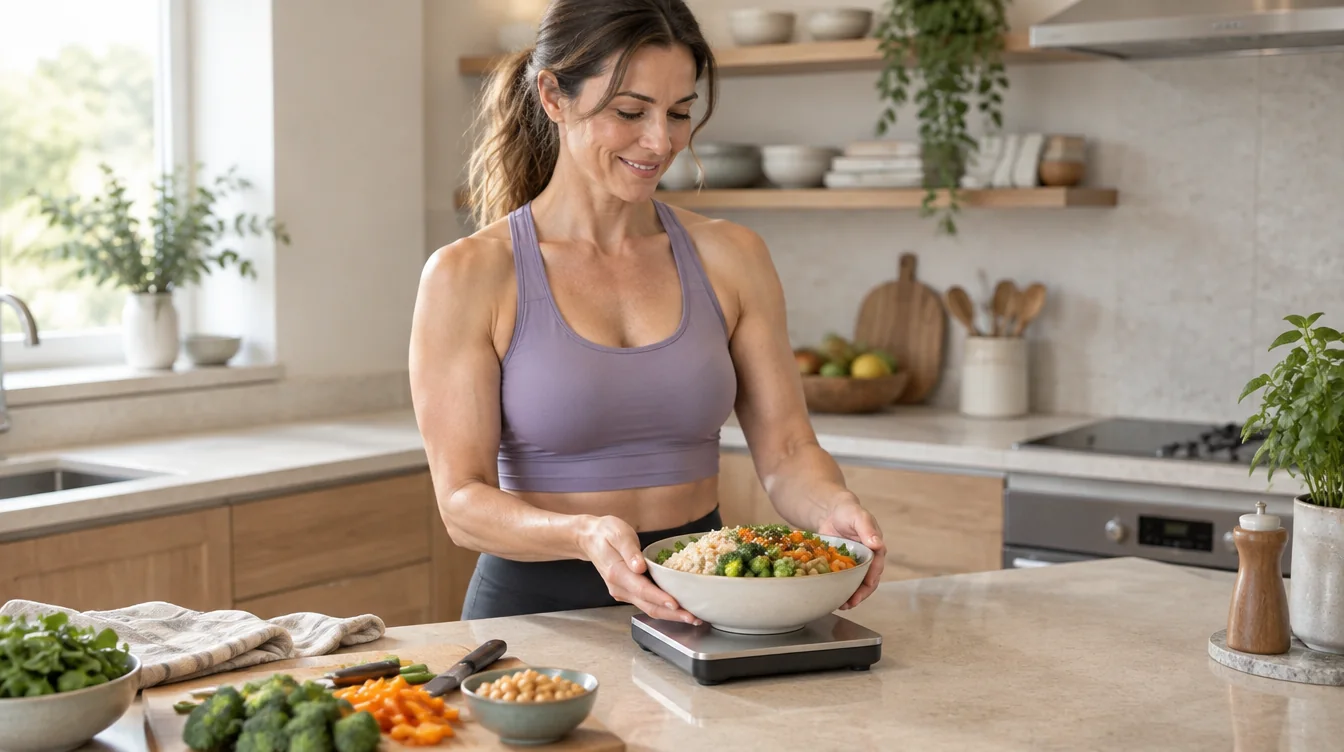
Cooked rice weighs more than dry rice because it absorbs water. You can weigh it either way, provided the food entry matches the state on the scale. Use the values on your packet and the amount you actually used to calculate the nutrition in your serving.
1. Check the product first
Compare the selected entry with the packet. Do the name, variety, nutrition table and amount the values refer to all match? Check even after a barcode scan, as similarly named products and older database records may have different values.
2. Separate 100 grams from a serving
Most prepacked foods sold in the EU list nutrition values per 100 g or 100 ml, with serving values sometimes shown as well.1 Other markets may use different label formats, so check the amount your packet refers to first. For a per-100-g value, calculate: nutrition value × grams in your serving ÷ 100. This works for calories, protein, carbohydrate and fat. If an entry uses “one piece”, check the weight it represents.
3. Match raw and prepared weights
A weighed serving of cooked rice cannot be entered directly against dry-rice values. Cooking changes the water content and therefore the amount those values describe. Choose an entry for the state you weighed. Knowing the weight of the whole cooked batch also lets you work back to the original dry quantity, as in the rice example below.
Soaking oats does not change the dry quantity you started with, and added ingredients are recorded separately. The breakfast example in Rolled oats: types, preparation and nutrition shows how this works in a meal.
The amount of tea powder used is also distinct from its content of individual compounds. Matcha: catechins, EGCG and longevity explains a further distinction between the amount in the powder and what happens to those compounds in the body.
4. Include the components you want to record
Include oil, dressing, drinks and any other separately added ingredients you want to record. For a mixed dish, entering the components separately often makes the record easier to check than a generic database result for the whole meal.
5. Keep estimates in perspective
When a restaurant recipe and quantities are unknown, use a reasonable estimate. Check the identified ingredients and serving size before accepting a photo suggestion. Use the same approach for similar meals and continue to treat the result as an estimate.
Weighing rice raw or cooked: a worked example
Dry or cooked, the food entry needs to match what is on the scale. Water absorbed in cooking changes how much water each 100 grams contains.
Suppose the packet lists 350 kcal per 100 g dry. You use 80 g of dry rice:
- 350 × 80 ÷ 100 = 280 kcal.
- After cooking, the same amount might weigh 250 g. If only water was added and cooking losses are set aside, it still contains 280 kcal, not 875 kcal.
- This particular cooked batch works out as 112 kcal per 100 g: 280 ÷ 250 × 100.
The label value and cooked weight here are examples, not fixed figures for rice. Water absorption varies with the rice and cooking method. There is no universal cooked-to-raw conversion factor. Calculate from your packet and the state you actually weighed.
Dividing a home-cooked dish into servings
- Record the ingredients using the appropriate reference amount, such as dry rice or drained chickpeas.
- Include the oil, dressing and other ingredients actually used.
- Weigh the finished dish without its pot. Use the scale’s tare function to subtract the empty container.
- Calculate your serving as a share of the total weight.
Worked example: All the ingredients together provide 640 kcal. Once cooked, the dish weighs 800 g without its container. A 200 g serving is one quarter, giving 160 kcal if the ingredients are reasonably evenly distributed. A serving containing almost all the tofu has a different composition from an equally heavy serving made up mainly of sauce.
For that 200 g serving, record either one quarter of each ingredient or one quarter of the known nutrition totals. Use just one approach. Adding the complete dish as well would count the meal twice.
To divide a larger batch into four containers straight away, see the meal-prep guide. Two fully calculated recipes are in the clean eating guide.
Common questions about nutrition values and portions
Should I weigh rice and potatoes raw or cooked?
Either works. The weight and food entry must describe the same state:
- Rice weighed dry: use a dry or uncooked rice entry.
- Rice weighed after cooking: use a cooked rice entry.
- Potatoes weighed before cooking: use a matching raw potato entry.
- Potatoes weighed after cooking: match the preparation, such as boiled or baked potatoes.
For potatoes, also check whether the entry includes the skin you eat. Weigh the portion you intend to record. Add oil, butter and other ingredients separately unless they are already included in the selected dish entry.
Rice absorbs water during cooking, so its cooked weight cannot be used unchanged with dry-rice values. If you use the packet’s nutrition table, check whether it refers to the product as sold or explicitly to the prepared product.3 The rice example above also explains how to calculate from the weight of the whole cooked batch.
How do I log leftover rice?
Keep using the amount you weighed and a food entry that matches its preparation state. Do not subtract a fixed share of calories just because the rice has been in the fridge. Resistant starch: What cooling changes explains why chilling time does not provide a reliable adjustment factor. It also covers safe cooling and reheating.
For canned foods, total or drained weight?
Check what the nutrition table refers to. If you pour away the liquid and eat only the chickpeas, the entry and weighed amount need to describe the drained food. The 400 g printed on a jar is not automatically the amount you eat.
Must I use the serving size printed on the packet?
No. It is the supplier’s reference amount. If the packet describes 40 g and you use 60 g, calculate using your 60 g. Values per 100 g help compare different products.
What if I cannot weigh a restaurant meal?
Use a reasonable estimate and treat it as one. Check whether the selected dish entry already includes the side dish, dressing or drink. Extra decimal places do not make an unknown recipe more accurate.
Why does a barcode result differ from the packet?
Products can change, as can database entries. Compare the brand, variety and reference amount with the current packet of the product you used. That packet is the most immediate reference, even when another entry has a similar name.
Your short checklist
- Is this the correct product variety?
- What reference amount does the entry use?
- Does raw or prepared match the amount you weighed?
- Have you recorded the components you intended to include?
- Which values are estimates?
Using The 8 Protocol
Find the matching product in The 8 Protocol or scan its barcode. Check the amount and preparation state its values refer to, then enter the quantity you used. If you already know the nutrition totals for your serving, you can use quick entry.2 The diary and data export are available without a subscription. Use the calculations above to work out the figures for your portion.
View The 8 Protocol on the App Store. Decide in the app whether Plus fits your routine. The prices and terms that apply to you are shown before you subscribe.
General information about recording food. Not individual dietary or medical advice.
Sources
- European Commission: nutrition labelling: Reference amounts for prepacked foods in the EU.
- The 8 Protocol on the App Store: Public description of search, barcode, quick entry and export.
- Regulation (EU) No 1169/2011, Article 31(3): The state described by food-label values, as sold or after specified preparation. Accessed 7 November 2026.