
Flaxseed: whole or ground?
A small processing step makes an important difference to flaxseed: grinding breaks open the seed coat. If you choose flaxseed for its plant-based omega-3 fat, ground seed is the more suitable form. Breaking it up also makes compounds accessible that can release hydrogen cyanide. The form, amount and preparation therefore belong together.12
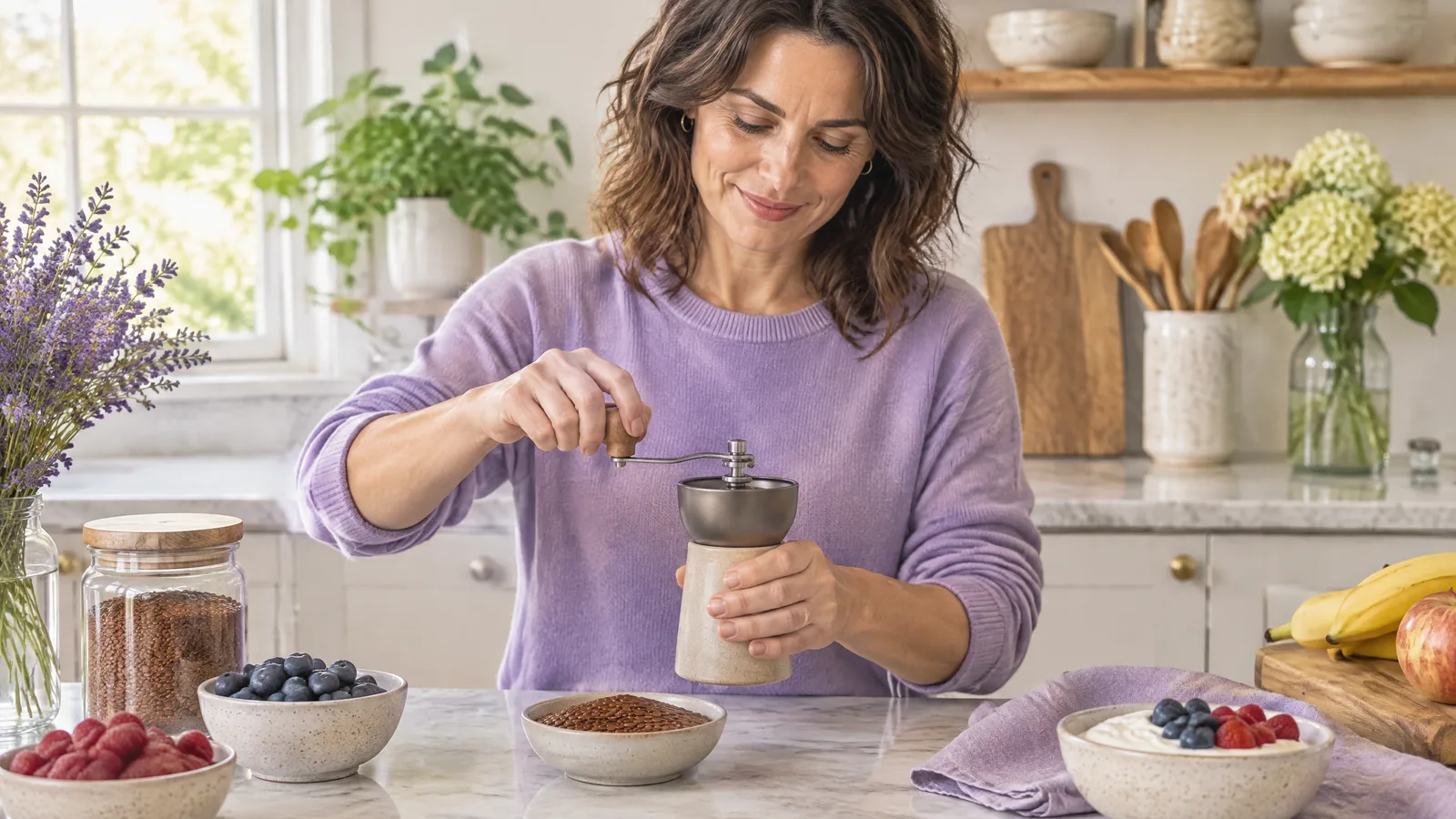
What grinding changes
Whole flaxseed has a firm outer coat. Grinding opens it mechanically and turns the small seeds into uneven fragments. Finer milling reduces their size further. Both forms contain the seed’s fat and fibre, unlike the oil pressed from it.
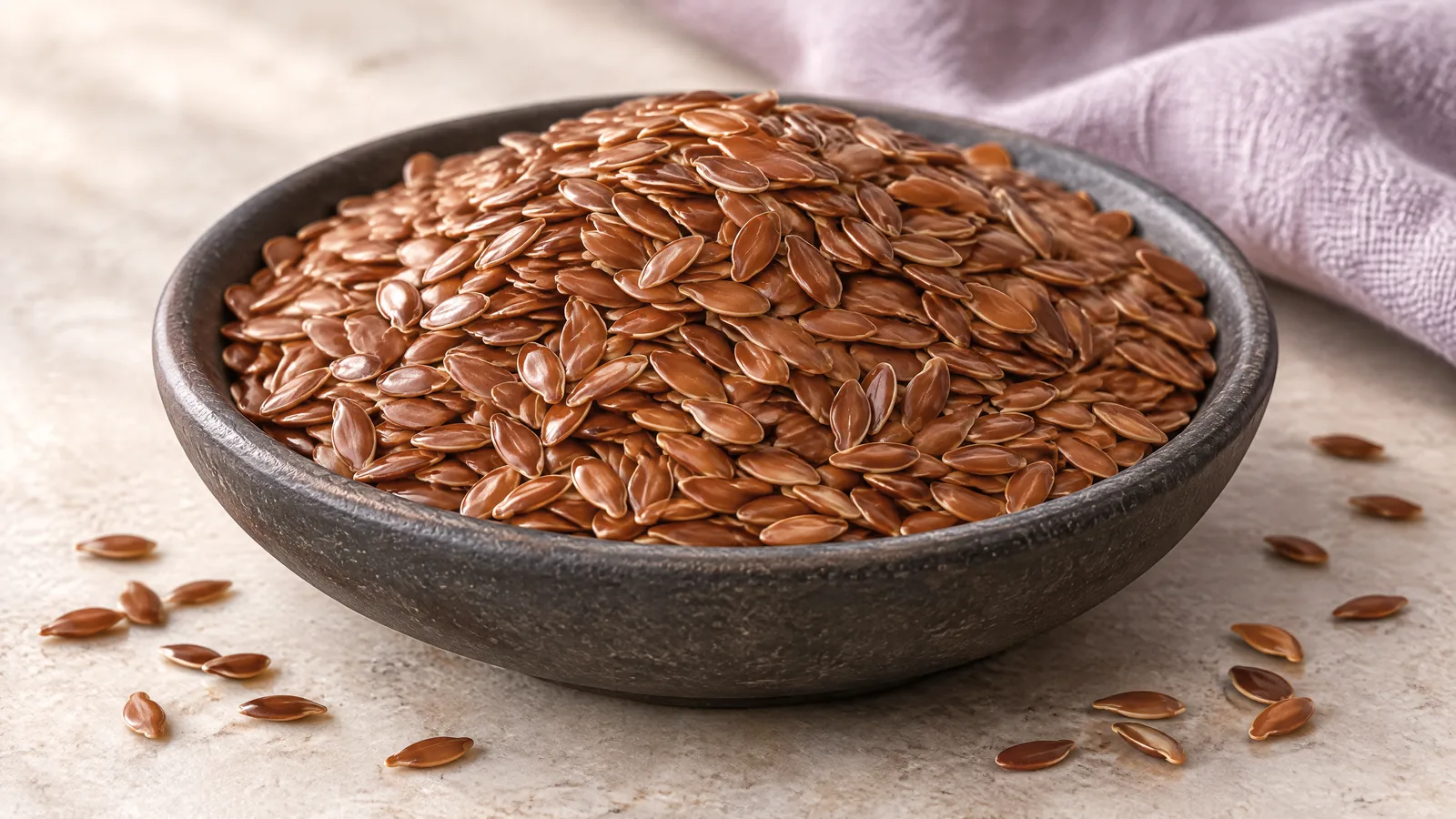
A study in healthy adults compared whole flaxseed, milled flaxseed and flaxseed oil, all baked into muffins. After a month, plasma alpha-linolenic acid had increased in the milled-seed and oil groups. The whole-seed group showed no statistically significant increase. This illustrates why a food’s physical form matters alongside its composition. The study examined the availability of this fatty acid under those particular conditions.2
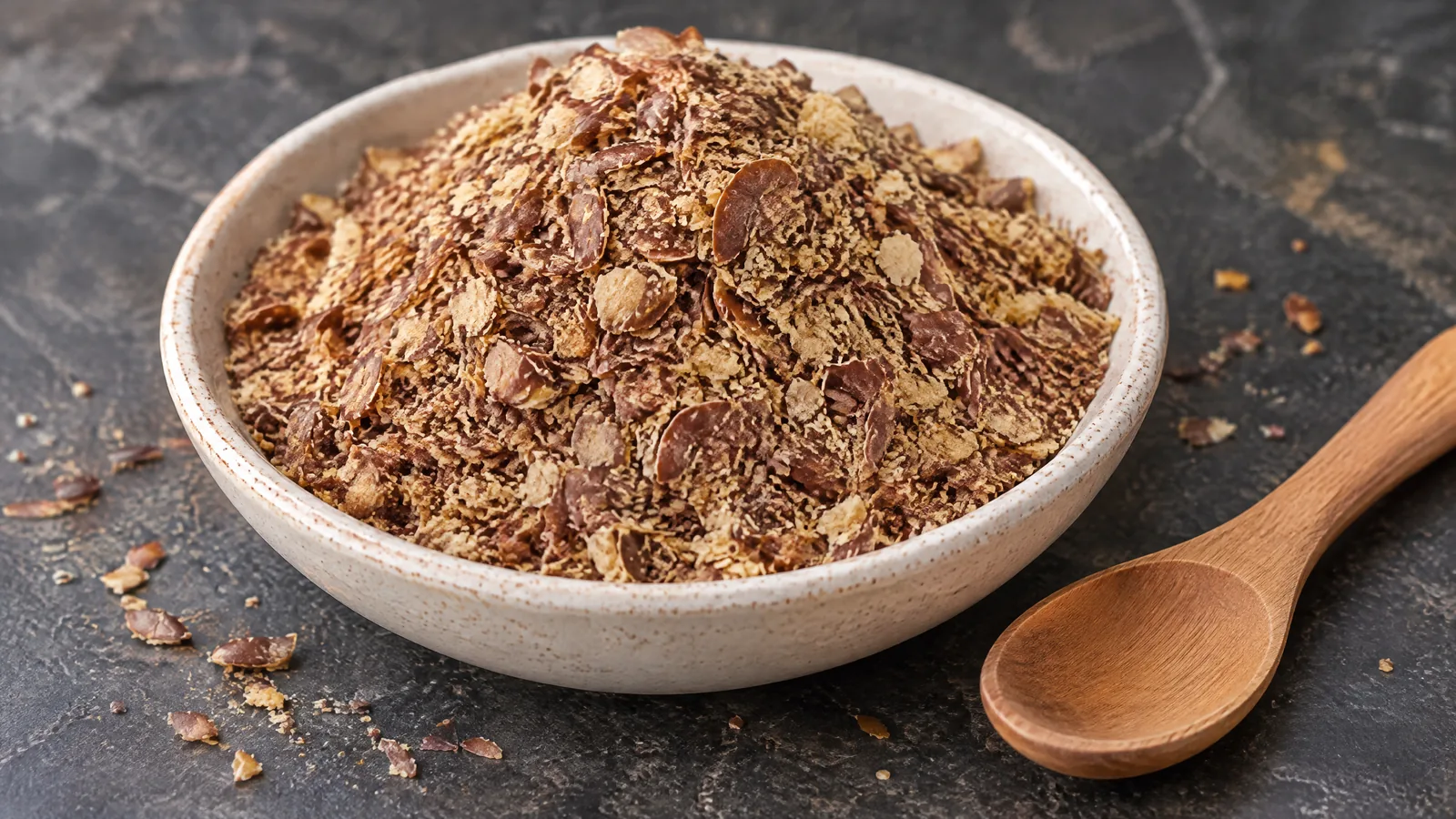
When you shop, “whole” and “ground” therefore describe more than a different texture. If you want to use flaxseed as a source of ALA, look for the broken-up form. You can also grind whole seeds at home. Whether the resulting product is suitable for eating raw depends on the instructions on its packaging.
The omega-3 fat in flaxseed
Flaxseed supplies alpha-linolenic acid, usually shortened to ALA. It is an essential fatty acid, which means the body needs to obtain it from food. ALA is a different compound from EPA and DHA, found in foods and products such as fish and algal oils. The body can convert ALA to EPA and then DHA, but only to a limited extent.3
Longevity and biohacking discussions often group these forms together as omega-3. The more specific name is useful when choosing food: flaxseed is a plant source of ALA. A gram amount of ALA cannot be read as the same amount of EPA or DHA. The same distinction applies to Chia seeds: omega-3 and soaking.
Read the packet before adding it to breakfast
Flaxseed naturally contains cyanogenic glycosides. Chewing or grinding allows enzymes to release hydrogen cyanide from these compounds. “Ground” alone therefore does not tell you whether a product belongs in a cold breakfast bowl.1
If the packet says “Only use for cooking and baking. Do not eat raw”, use it in a preparation that meets those instructions. Soaking it in cold liquid does not replace the required cooking or baking. Germany’s Federal Institute for Risk Assessment, BfR, explains that heating both helps hydrogen cyanide escape and inactivates the enzymes involved. This does not establish one cooking time for every product. Follow its specific preparation instructions.1
The same applies when you grind whole seeds yourself: processing them at home does not cancel the warning on the packet.
Daily amounts still matter when baking
BfR gives a maximum of 15 to 20 grams of raw, ground flaxseed per day for adults. Because flaxseed can also contain cadmium, it recommends a total of no more than 20 grams of flaxseed daily. This is an upper limit, not a nutrition target. Count the flaxseed in breakfast and other foods together. Heating addresses the hydrogen cyanide issue, but does not remove cadmium.1
These figures apply to adults. BfR advises against giving raw, ground flaxseed to young children. An adult portion is therefore not a template for a child’s breakfast.
Flaxseed is also high in fibre. Use it with plenty of fluid rather than swallowing a spoonful of dry ground seed. If you take medicines by mouth, ask your doctor or pharmacist about an appropriate interval.4 For more on the different properties of fibre, see Dietary fiber: What makes the types different.
A food ingredient, not an optimisation protocol
Three questions bring the science back to your meal. Is the seed whole or ground? Do the packet instructions suit the raw or cooked preparation you have in mind? How much flaxseed does the day contain altogether? That gives you a practical basis for choosing it, rather than treating the word superfood as a reason for ever-larger portions.
If you record breakfast in The 8 Protocol, add the flaxseed as an ingredient with the amount you used. When preparing a larger batch, relate the amount to the portion you actually eat.
This article explains a food for adults. Individual medical suitability belongs in a discussion with a qualified professional.
Sources
- German Federal Institute for Risk Assessment: Blausäure und Cadmium in Leinsamen. Communication 034/2026, 16 June 2026, in German. Grinding, heating, package warnings, adult amounts and young children.
- Austria JA et al.: Bioavailability of alpha-linolenic acid in subjects after ingestion of three different forms of flaxseed. Journal of the American College of Nutrition, 2008. DOI 10.1080/07315724.2008.10719693. Original study, public abstract. ALA availability in healthy adults consuming products baked into muffins.
- NIH Office of Dietary Supplements: Omega-3 Fatty Acids, Health Professional Fact Sheet. Updated 22 August 2025. ALA, EPA and DHA and limited conversion.
- Mayo Clinic: Flaxseed: Is ground better than whole?. 31 January 2023. Consumer health information on fibre, fluids and oral medicines.