
Clean eating without rigid rules: shopping and recipes
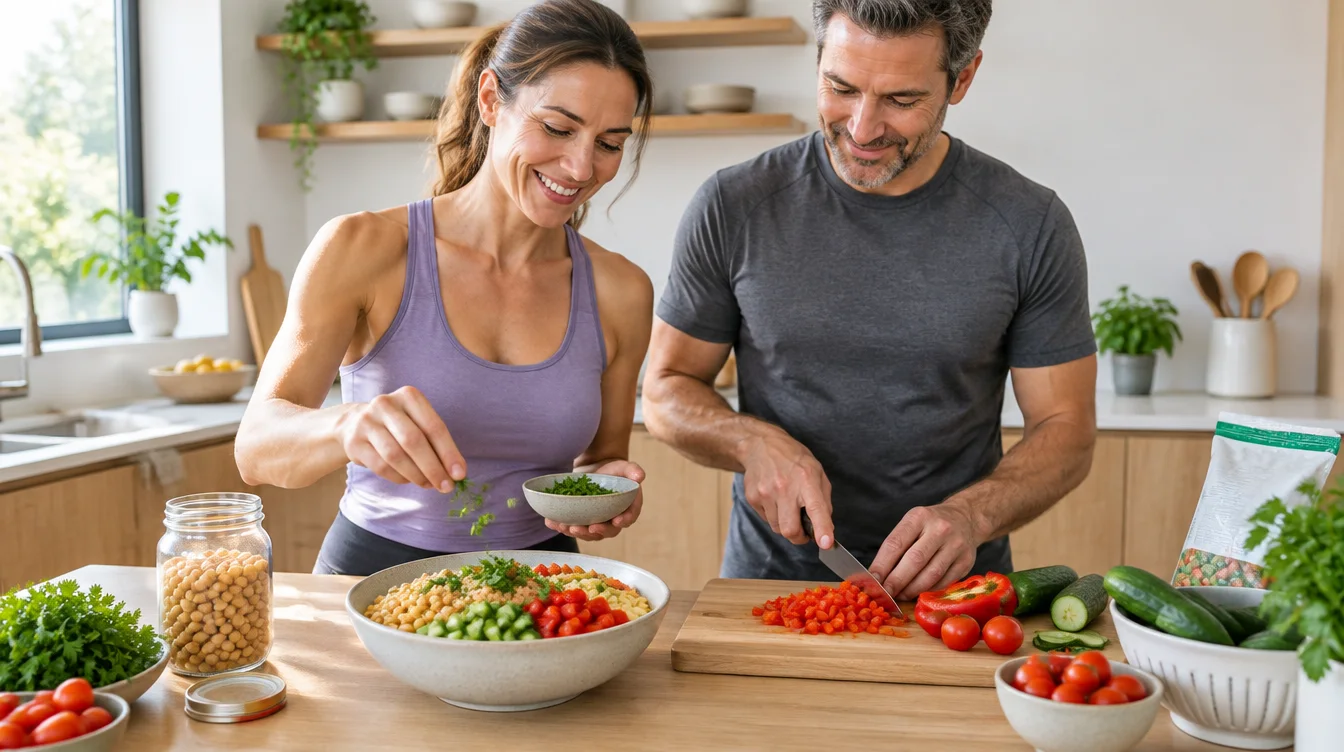
Couscous with vegetables and chickpeas does not require cooking everything from scratch. Ready-cooked chickpeas and frozen vegetables can be part of the same meal. A workable approach to clean eating looks at what those ingredients contribute and how you use them, rather than sorting food into “pure” and “impure”.
What clean eating means
Clean eating usually refers to minimally processed foods and home-prepared meals, but there is no single set of rules. Harvard Nutrition Source describes interpretations that extend to excluding entire food groups.1 In the kitchen, it helps to start with a dish and choose ingredients for it.
Plan around a dish: Check what you have for a base, vegetables and a suitable addition. Then decide what to cook and what is missing. Couscous or chickpea fusilli with passata can be starting points.
Your shopping list can include convenient ingredients
| Part of the meal | Possible ingredients | What to check |
|---|---|---|
| Base | Oats, bread, rice, couscous or pasta | Does the cooking time fit your evening? |
| Vegetables and fruit | Fresh, frozen or suitable canned options | What will you use in time, and what preparation does the package require? |
| Addition | Cooked beans, chickpeas, lentils, eggs, tofu or plain yogurt | What fits the dish and your preferences? |
| Sauce and flavor | Passata, oil, lemon, herbs and spices | What do you already have, and how much will you use? |
These are kitchen options, not nutritionally equivalent serving swaps. Similar color, for example, does not mean a plant drink has the same composition as milk.7
For an oat-based breakfast, Rolled oats: types, preparation and nutrition compares types and explains both warm porridge and cold preparation. Use it to choose oats that suit your bowl before you shop.
If bran is on your shopping list instead, Oat bran: fibre and beta-glucan helps distinguish plain bran flakes from crunchy mixtures. Choose by ingredients and intended use rather than the product name alone.
For seeds, the actual ingredient matters more than a superfood label too. Chia seeds: omega-3 and soaking explains the plant omega-3 form ALA and preparation with liquid.
Plain yogurt and frozen vegetables are processed too. Milling, freezing and pasteurizing are among the everyday processing steps Harvard describes.2 Choose a product by its ingredients and how you plan to use it. Organic, local and seasonal can be separate shopping criteria.
Water or unsweetened tea can go with the meal. Neither requires a special clean-eating product.7
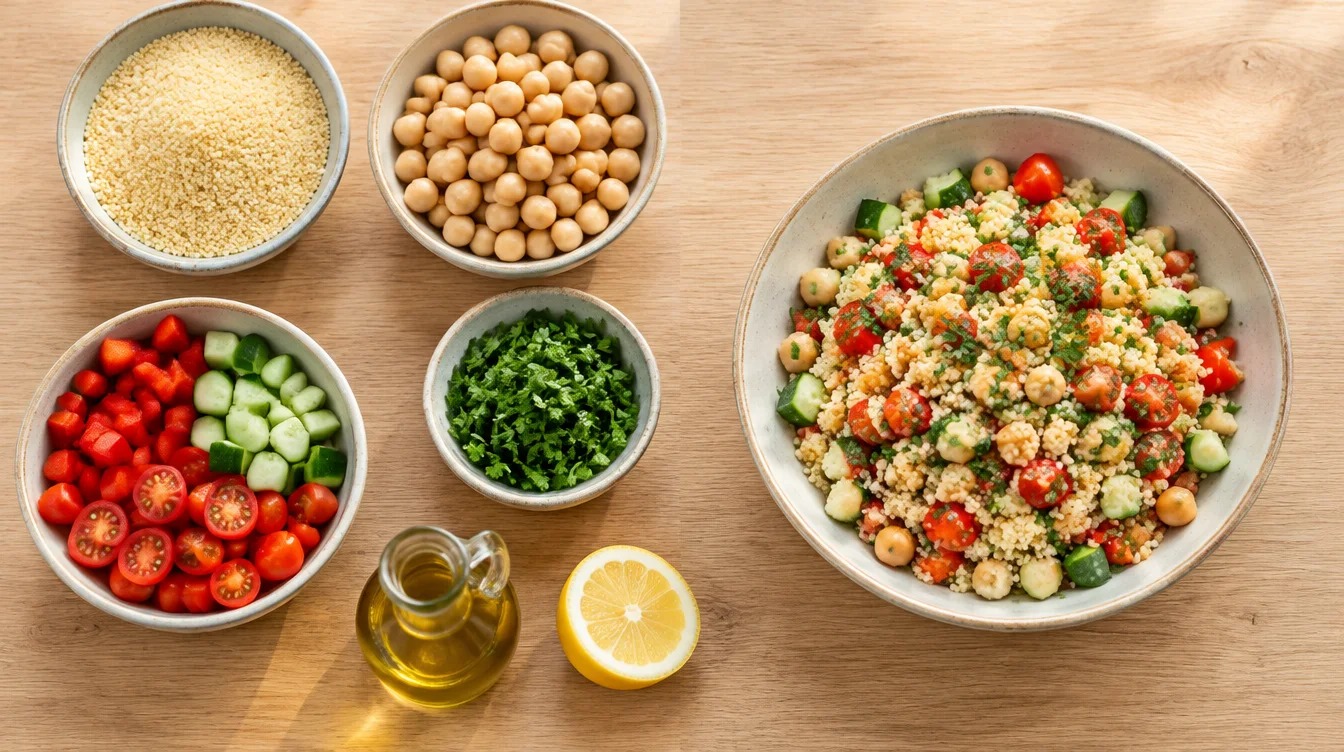
From pantry to shopping list
- Check your pantry, refrigerator and freezer for a base, vegetables and a suitable addition. What do you want to use first?
- Choose one dish. The tomato couscous below starts with couscous and passata. Add vegetables or cooked legumes if you like.
- Write down the missing amounts. Use dry weight for couscous and drained weight for cooked legumes. Decide how you will use what remains in each package.
- Choose a fallback if something is unavailable. Other pasta needs its own cooking time. Cook frozen vegetables separately before adding them.
Four swaps for a busy workday
| When this does not fit | Practical alternative | What changes |
|---|---|---|
| Soaking and cooking dried chickpeas | Ready-cooked chickpeas in a jar or can | Start with a ready-to-eat product. Check the drained weight and directions. |
| Fresh vegetables sit unused for days | Take out a portion of frozen vegetables | Follow cooking instructions rather than assuming they can be eaten raw. |
| Making an elaborate sauce | Heat passata and add what you like | Fewer steps, while you still choose flavor and ingredients. |
| Trying a new recipe tonight | Cook a familiar dish with what you have | No extra shopping just to satisfy a food label. |
For similar products, compare ingredients, preparation and unit price at your grocery store. A larger package is useful only if you can use its contents.
Two simple pantry recipes
Each warm base dish is divided into two equal example servings. Adjust the amounts for your own meal. The nutrition calculations use the specific German products in the source list. If you choose another brand, use the values on its pack.345
Tomato couscous
You need: 150 g whole-wheat couscous, weighed dry, 300 g passata and water as directed on the couscous package. Have a heatproof bowl, a small saucepan and a fork ready. Wheat couscous contains gluten.
- Prepare the couscous with boiling water according to your package. The product used here specifies about ten minutes of standing time.3
- Heat the passata in the saucepan, stirring until hot throughout. Add a little water if it becomes too thick.
- Fluff the couscous with a fork, mix in the hot passata and divide between two bowls.
Add separately cooked vegetables or cooked chickpeas if you like. The nutrition table covers only the base recipe. Include extra ingredients, oil and seasonings in the calculation for your version.
Chickpea fusilli with tomato sauce
You need: 150 g chickpea fusilli, weighed dry, 300 g passata and cooking water as directed on the pasta package. Have a saucepan, a strainer and a second small saucepan ready.
- Bring the water to a boil. The manufacturer specifies one liter per 100 g pasta and six to eight minutes of cooking for these fusilli. Check the instructions on your pack.4
- Cook the fusilli while heating the passata separately, stirring.
- Check the pasta toward the end of the stated cooking time, drain and combine with the hot sauce. Divide between two bowls.
The calculation assumes no added salt or oil. Include either if you use it, along with any topping. The figures use the manufacturer’s values for the dry pasta. Losses into the cooking water have not been measured.
Following the nutrition calculation
| Example and reference amount | kcal | Fat g | Carbohydrate g | Fiber g | Protein g | Salt g |
|---|---|---|---|---|---|---|
| Tomato couscous, whole recipe | 599 | 3.8 | 109.8 | 15.5 | 23.7 | 1.22 |
| Tomato couscous, equal half | 299 | 1.9 | 54.9 | 7.7 | 11.9 | 0.61 |
| Tomato chickpea fusilli, whole recipe | 608 | 8.9 | 87.3 | 17.3 | 37.2 | 1.22 |
| Tomato chickpea fusilli, equal half | 304 | 4.4 | 43.7 | 8.6 | 18.6 | 0.61 |
For each ingredient, multiply its value per 100 g by the grams used, then divide by 100. Add the ingredients together. Divide the recipe total by two for an equal half. The table rounds only at the end. Water changes the finished weight, not the amount of ingredients added. Without a measured finished weight, this does not give values per 100 g of cooked food.
If you divide the dish unequally, “one half” no longer describes your serving. The guide to nutrition values and portions explains how to keep dry and cooked amounts separate.
What the numbers mean for your ingredient choices
In these two base recipes, an equal half of the chickpea fusilli provides more protein than the whole-wheat couscous, with a similar energy content. Fiber values differ too, though less markedly. This describes these particular products and amounts, rather than ranking all pasta and grain dishes. The figures come from the manufacturers’ ingredient declarations.345
Dietary protein supplies amino acids that the body uses to build its own proteins, including components of muscle and enzymes.10 You could add cooked chickpeas or tofu to the couscous as a separate ingredient. With the fusilli, the legume is already in the pasta. The amount of protein in your meal depends on the product and serving. Protein needs over 40: amounts and everyday meals explains the basics and different sources.
Depending on the type, vegetables provide vitamins, minerals, fiber and phytochemicals. Legumes contribute plant protein, fiber and other nutrients. Both can complement each other in a meal.7 For couscous, choose a suitable protein source and vegetables you enjoy and can prepare. With chickpea fusilli, you can move straight to choosing the vegetables to go with it.
Making it fit work and training
Deciding on a dish before you shop means buying passata and pantry ingredients for a particular dinner. Frozen vegetables, prepared as directed, can go with it. The meal is already chosen when you get home. Shopping and washing up still take time, but convenient ingredients can remove individual preparation steps.
For a training evening, choose the dish and set out the ingredients beforehand. If you are hungrier afterwards, adjust the amount and additions. When cooking several servings, use the meal-prep guide for dividing and chilling them. Neither the term clean eating nor being over 40 or training on its own establishes your calorie or protein needs. For the separate protein question, see the protein guide with reference values and meal examples.
Common questions
Which foods belong in clean eating?
There is no single agreed list. Vegetables, fruit, grains and legumes are common examples, but the exact selection depends on the interpretation.1 A planned use and the preparation instructions help more than a purity label.
How do I start in everyday life?
Choose one dish, check what you already have and write down only what is missing. Each base recipe above starts with two foods and water. Choose any additions to suit your taste and the time you have.
What are the practical advantages?
You plan shopping and use together. If you already know the pasta and tomatoes will become dinner, both packages have a specific purpose before you buy them.
How is it different from low carb or paleo?
Low carb reduces carbohydrate intake. Paleo typically excludes grains, legumes and dairy.89 Clean eating has no single agreed set of rules, although some versions are similarly restrictive.1 Bread, couscous and legumes remain part of the meals described here.
A quick shopping check
- Do you know which dish you will cook?
- Have you checked what is already available?
- Do cooking time, quantity and use of leftovers fit?
- Are you distinguishing dry, cooked and drained amounts?
- Do you have an alternative if an ingredient is unavailable?
Record ingredients rather than rating a meal “clean”
To document your meal, record the ingredients and amounts actually used. For the fusilli, dry pasta and passata are easier to check than a generic database match for “pasta with sauce”. The 8 Protocol offers food search and barcode entry in an iPhone food diary. The diary and export are available without a subscription.6 View The 8 Protocol on the App Store.
Note: General cooking and recording examples for adults, not personal dietary advice. Follow package instructions, allergen information and safe preparation. If eating increasingly brings anxiety, guilt or compulsive rules, seek qualified support rather than stricter food rules.
Sources
- Harvard Nutrition Source: Clean Eating, reviewed February 2022: the term and its varying interpretations.
- Harvard Nutrition Source: Processed Foods and Health, reviewed August 2023: processing categories and examples.
- dmBio whole-wheat couscous: product-specific German declaration, read 24 October 2026. Not a brand recommendation or a universal food value.
- dmBio chickpea fusilli: product-specific German declaration, read 24 October 2026. Not a brand recommendation or a universal food value.
- dmBio passata: product-specific German declarations, read 24 October 2026. These are not brand recommendations or universal food values.
- The 8 Protocol on the App Store: public feature description.
- DGE: Food-based dietary guidelines, in German: drinks, milk alternatives and the nutrients supplied by vegetables and legumes; reread 1 November 2026. These food-based guidelines address healthy adults aged 18 to 65 in Germany who eat a mixed diet.
- DGE: Paleo, DGEinfo 4/2018, in German: typically excluded food groups.
- BARMER: Clean eating in everyday life, in German: comparison with low-carbohydrate eating approaches, read 24 October 2026.
- DGE: Protein and indispensable amino acids, updated 10 September 2025, questions 1 to 3, in German: protein structure and functions; read 1 November 2026.